Interdicțiile privind pungile de plastic înseamnă mult mai mult decât simpla interzicere a pungilor de plastic; Acum câțiva ani, Adam Sternbergh a scris un articol excelent pentru New York Magazine, Lupta pentru pungile de plastic înseamnă mult mai mult decât cum să-ți duci cumpărăturile acasă, discutând despre interdicțiile privind interdicțiile în Arizona:
The legislation says nothing about reducing trash or encouraging recycling, or about any sort of environmental goal at all. It’s not really about the environment. It’s about control. It’s about which government has the power to make which rules. And it’s about what kind of world various ideological factions envision. It’s about whether we are consumers or citizens.
Acum războiul a ajuns în Michigan, unde guvernul statal a adoptat o lege care interzice interdicțiile privind pungile, prohibind guvernele locale să interzică, să reglementeze sau să impună taxe pe utilizarea pungilor de plastic și a altor recipiente. Mai precis, este:
A local unit of government shall not regulate for the use or sale of an auxiliary container.
care include nu doar pungi de plastic, ci orice:
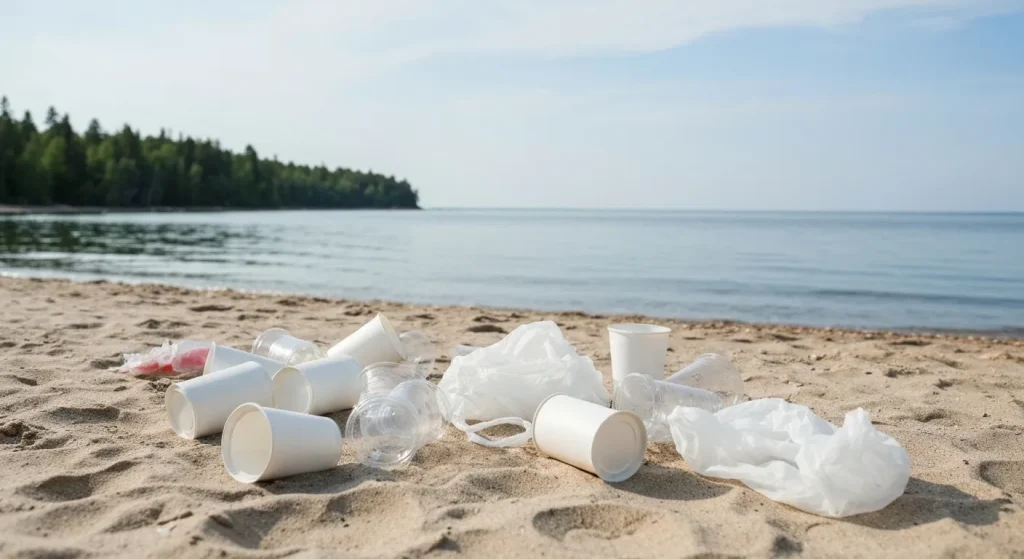
Disposable bag, cup, food container, or other packaging that is made of cloth, paper, plastic, foamed plastic, or other similar material, or any combination of those materials, and is designed for 1-time use for containing, protecting, or handling food, beverages, or retail goods.
Lake Scientist/via
Aceasta nu este doar ridicolă, luând controlul local, ci este fundamental stupidă pentru un stat care depinde în mare măsură de turismul către plaje imaculate. Conform Lake Scientist,
The Great Lakes contain some of the highest microplastic counts in the world.
Dar hei, industria restaurantelor a dorit asta. În comunicatul lor de presă notează:
These types of local ordinances can create confusion for consumers and burdensome requirements for Michigan’s restaurant owners. Having consistent statewide regulations is particularly important to restaurants, many of which have multiple locations across various municipalities.
Washington Post și ziarele locale se concentrează pe interdicția pungilor, dar implicațiile legii sunt mult mai mari de atât. Pahare de polistiren, sticle de plastic, cum vreți; localurile cu mâncare la pachet pot face asta chiar de la standul de pe malul plajei și comunitățile locale nu pot face nimic în privința asta.
Comisia Internațională Comună/Captură de ecran
Este de asemenea interesant că Comisia Internațională Comună, înființată în baza Tratatului privind Apele de Graniță din 1909, se ocupă de poluarea apei:
The governments of Canada and the United States refer questions or issues of concern to the IJC for examination and recommendation. Under the Boundary Waters Treaty of 1909, the IJC prevents and resolves disputes between Canada and the United States concerning the use and quality of boundary waters and advises the two governments on transboundary environmental matters.
CICC tocmai a publicat recomandări privind microplasticele:
Plastic debris is an emerging threat to the health of the Great Lakes and connecting rivers.
Cu toate acestea, Michigan, probabil cel mai important stat din America când vine vorba de protejarea Marilor Lacuri, a decis să facă imposibil ca oricine să facă ceva pentru a preveni intrarea resturilor de plastic în lacuri. Nu numai că încalcă drepturile autorităților locale, dar posibil că sfidează legea internațională. Dar hei, ăsta e modul de viață american.


